When sourcing custom packaging, especially from an overseas supplier, it’s normal to have questions.
Many buyers reach out to us with a similar concern:
I’m interested, but I don’t really know your company or how your product sizes work.
That hesitation is understandable. Packaging sizes, materials, and use cases aren’t always clear at the beginning, and choosing the wrong Size can lead to wasted cost, delays, or products that don’t feel right in real use.
This guide is created to remove that uncertainty.
Here, you’ll find a clear overview of who ITENDEE is, what types of custom packaging we specialize in, and how our size recommendations actually work in practice, not just on specification sheets.
Our goal is simple: to help you understand the process early, make informed decisions, and move forward with confidence before anything is finalized or produced.
About ITENDEE | What We Do and How We Work With Buyers
ITENDEE designs and manufactures custom fashion packaging for brands and retailers that need reliable production, precise sizing, and predictable outcomes.
We operate as a factory-direct packaging partner, not a trading intermediary. Our in-house team and self-owned factory work together to support buyers from the first conversation through final delivery.
How ITENDEE Works Differently
ITENDEE combines factory production and export support into a single, direct workflow, enabling buyers to get clear answers, faster decisions, and production-ready recommendations without relying on intermediaries.
Direct Factory & Export Team (No Middle Layer)
You communicate directly with our production and export teams. With a professional staff of 100+ people and a self-owned manufacturing facility, we control quality, timelines, and technical details without passing information through third parties.
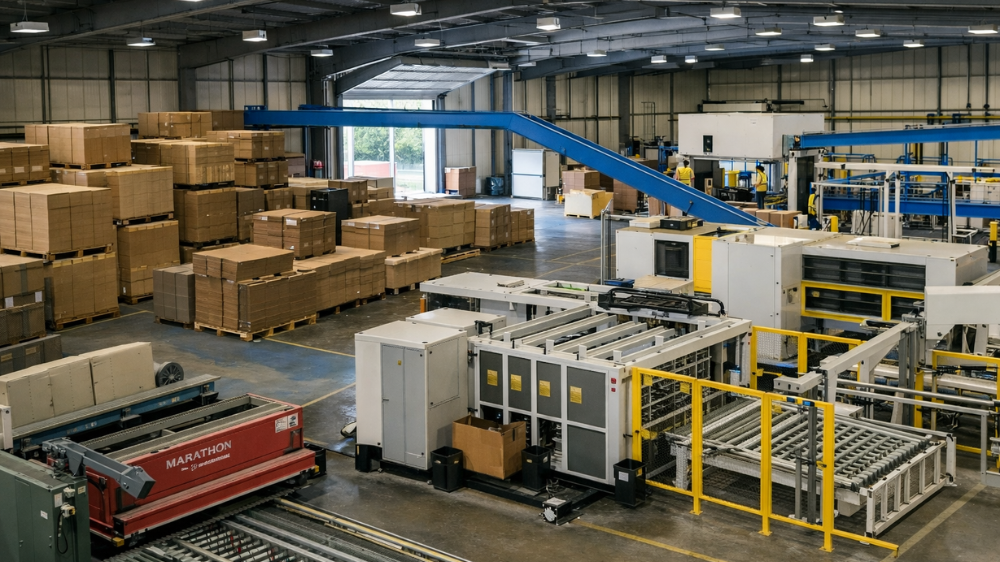
This direct structure reduces misunderstandings and allows faster, more accurate decision-making.
End-to-End Support From Design to Export
We manage the entire packaging process in one workflow:
- Design guidance based on real usage
- Sample development for size and material validation
- Mass production management
- Export coordination and logistics tracking
Each buyer receives 1-on-1 support and regular follow-ups to ensure specifications, timelines, and expectations remain aligned throughout production.
Faster Communication, Lower Coordination Cost
Overseas sourcing often fails because communication slows down or details get lost.
Our process is customer-oriented and time-sensitive. During working hours, we typically provide an initial packaging solution within 5 minutes once we understand your needs. This speed helps prevent delays, rework, and unnecessary back-and-forth.
Our role goes beyond manufacturing.
We help buyers make practical, production-ready decisions before costs are finalized, especially when sourcing packaging overseas or working with a new supplier. By clarifying sizing, materials, and usage early, we reduce risk and ensure the final packaging performs as expected in real-world use.
How Our Size Recommendations Work
Packaging sizes are not one-size-fits-all, and relying on generic size charts alone often leads to mismatches in real use.
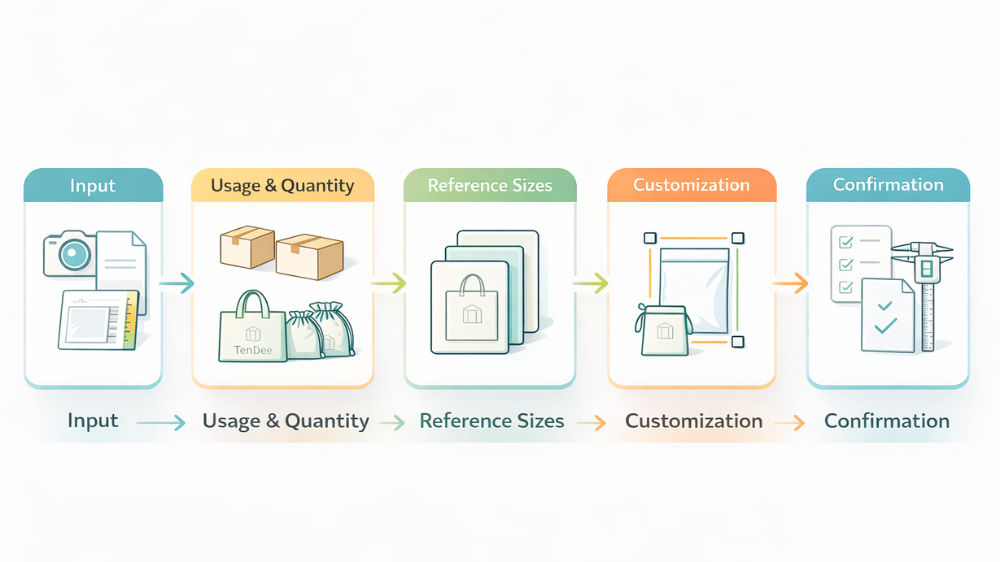
At ITENDEE, size recommendations are based on how the packaging will actually be used, supported by proven reference sizes, and finalized through confirmation before production.
Our Approach to Sizing
- Sizing is determined by product, quantity, material, and use case
For example, a reusable cotton tote for retail carry requires different proportions and material weight than a soft pouch designed to hold a single jewelry item. - Reference sizes guide the recommendation; final sizes are customized
We use commonly accepted dimensions as starting points, then adjust based on packing method, presentation, and handling requirements. - Dimensions and tolerances are confirmed before production begins
All key measurements are reviewed and approved in advance to ensure the packaging performs as expected in practical use.
This structured approach reduces uncertainty, prevents avoidable revisions, and ensures the final packaging aligns with both functional and presentation requirements.
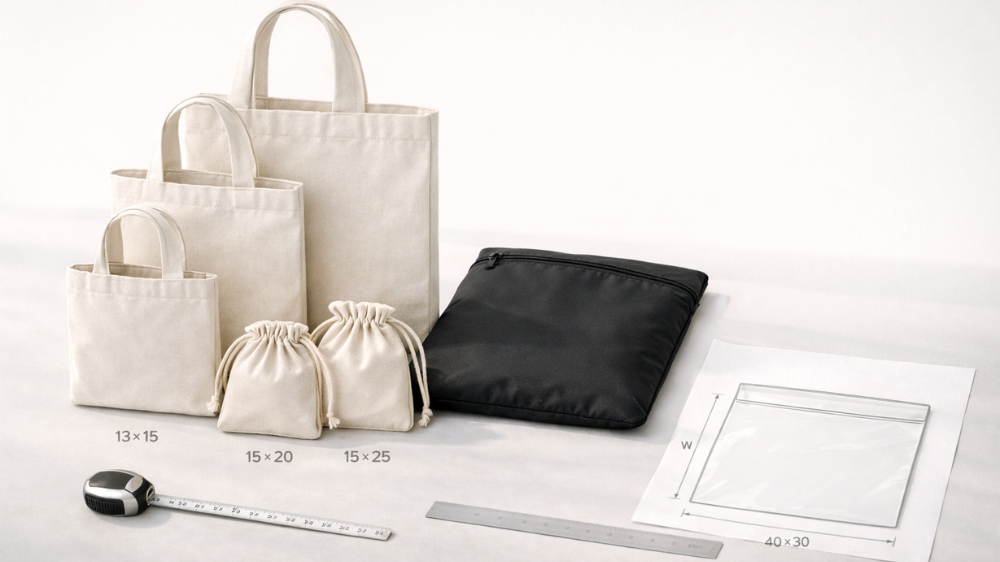
Reference Size Guide by Usage Scenario
The sizes below are commonly recommended reference ranges based on real production and usage.
Final dimensions may be adjusted based on product thickness, quantity per package, and material choice.
1. Retail & Daily Carry | Tote Bags
| Use Case | Common Size (cm) | Common Size (in) | Notes |
|---|---|---|---|
| Light retail checkout | 30 × 35 | 11.8 × 13.8 | Suitable for small apparel or accessories |
| Standard retail & daily use | 35 × 45 | 13.8 × 17.7 | Balanced Size for comfort and reuse |
| Heavy or multi-item carry | 40 × 50 | 15.7 × 19.7 | Often paired with thicker cotton or canvas |
2. Fashion & Jewelry | Drawstring / Pouches
| Product Type | Common Size (cm) | Common Size (in) | Notes |
|---|---|---|---|
| Single jewelry item | 13 × 15 | 5.1 × 5.9 | Compact fit improves presentation |
| Jewelry set/accessories | 15 × 20 | 5.9 × 7.9 | Allows light spacing without excess |
| Small fashion accessories | 18 × 25 | 7.1 × 9.8 | Works well with soft materials |
3. Apparel Storage & Transport | Garment Bags
| Garment Type | Common Size (cm) | Common Size (in) | Notes |
|---|---|---|---|
| Shirts / light garments | 60 × 100 | 23.6 × 39.4 | Folded or lightly hung |
| Dresses/coats | 60 × 150 | 23.6 × 59.1 | Prevents wrinkles and friction |
| Long garments | 65 × 180 | 25.6 × 70.9 | Used for full-length storage |
4. E-Commerce & Logistics Packaging
| Use Case | Common Size Range (cm) | Notes |
|---|---|---|
| Single-folded garment | 30 × 40 – 35 × 45 | Snug fit reduces movement |
| Multi-item apparel pack | 35 × 45 – 40 × 50 | Depends on fabric thickness |
| Protective outer packaging | Custom | Often paired with lightweight material. |
Standard Packaging Size Chart (Reference)
Many buyers prefer to start with standard-size references before discussing customization.
The sizes below reflect commonly used industry standards for fashion and retail packaging.
These areindustry-standard reference sizes commonly used in fashion and retail packaging.
They serve as a starting point. Final sizing may be adjusted based on product thickness, quantity, and material.
Standard Tote Bag Sizes
| Size Category | Dimensions (cm) | Dimensions (in) | Typical Use |
|---|---|---|---|
| Small | 30 × 35 | 11.8 × 13.8 | Light retail items, accessories |
| Medium | 35 × 45 | 13.8 × 17.7 | Standard retail & daily carry |
| Large | 40 × 50 | 15.7 × 19.7 | Multi-item or heavier carry |
Standard Drawstring / Pouch Sizes
| Size Category | Dimensions (cm) | Dimensions (in) | Typical Use |
|---|---|---|---|
| Small | 13 × 15 | 5.1 × 5.9 | Single jewelry item |
| Medium | 15 × 20 | 5.9 × 7.9 | Jewelry sets, accessories |
| Large | 18 × 25 | 7.1 × 9.8 | Fashion accessories |
Standard Garment Bag Sizes
| Garment Type | Dimensions (cm) | Dimensions (in) | Typical Use |
|---|---|---|---|
| Short garments | 60 × 100 | 23.6 × 39.4 | Shirts, light apparel |
| Standard garments | 60 × 150 | 23.6 × 59.1 | Dresses, coats |
| Long garments | 65 × 180 | 25.6 × 70.9 | Full-length clothing |
Standard Apparel Poly / Inner Packaging Sizes
| Use Case | Dimensions (cm) | Dimensions (in) |
|---|---|---|
| Single-folded T-shirt | 30 × 40 | 11.8 × 15.7 |
| Hoodie / thick garment | 35 × 45 | 13.8 × 17.7 |
| Multi-item pack | 40 × 50 | 15.7 × 19.7 |
Important Notes
- These sizes reflect commonly used industry standards
- They are suitable for most initial quotations and planning
- Material thickness, flexibility, and packing quantity may affect usable space
- Final dimensions and tolerances are confirmed before production
This keeps sizing predictable while allowing room for adjustment when needed.
What Information Helps Us Recommend the Right Size
You don’t need exact measurements or technical details to get started. To recommend the right packaging size, we only need a basic understanding of your product and how it will be used.
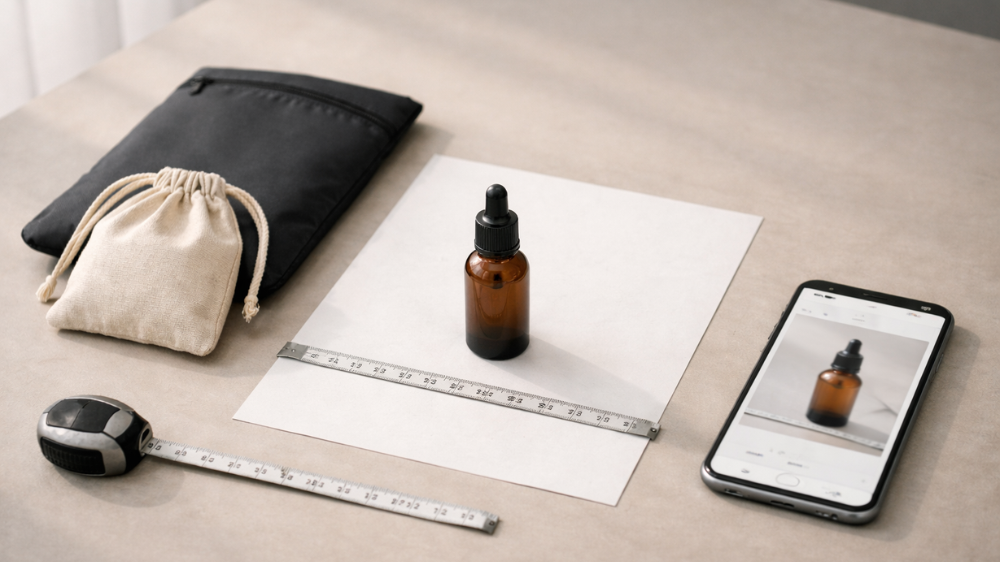
Here’s what helps most, even if you can only share part of it.
Fastest Way to Get a Size Recommendation
To recommend the right packaging size, we only need a few basic details. Exact measurements are not required.
① A product photo
Place the product next to A4 paper or a ruler, or show it inside its current packaging. This helps us understand the approximate Size and shape.
② How many items go in one package
Let us know whether the packaging holds one item or multiple items, as this directly affects the required space and fit.
③ How the packaging will be used
Tell us whether it’s for retail handover, e-commerce shipping, or storage/travel. Usage helps us fine-tune the Size so it works in real use.
That information is usually enough for us to recommend a suitable size range. Final dimensions and tolerances are always confirmed with you before production begins.
That’s It | You Don’t Need to Send Everything
Even one or two of the above details are enough for us to start.
We’ll review what you share, recommend a workable size, and help clarify the rest before anything is finalized.
Sampling & Approval Process
For many buyers, especially those sourcing packaging overseas for the first time, sampling is the most reliable way to confirm that Everything works as expected before production begins.
When Sampling Makes Sense
Sampling is most useful when:
- The product has unique dimensions or packaging requirements
- The fit needs to be precise
- Material thickness or structure may change how the Size feels
- The packaging plays a role in presentation or brand experience
In straightforward cases, sampling may not be necessary. When there’s uncertainty, it adds clarity.
What Sampling Helps You Validate
A sample allows you to see and feel the packaging before committing to production. It helps confirm:
- That the product fits comfortably inside the packaging
- That the material feels right in hand
- That the overall Size and proportions look correct
- That the packaging performs well in real handling and use
This step ensures expectations match reality.
How Approval Works
Once a sample is reviewed:
- Any feedback or adjustments are discussed
- Final dimensions and tolerances are confirmed
- Production proceeds only after approval
This ensures there are no surprises once manufacturing starts.
Why Sampling Matters
Sampling reduces risk by allowing adjustments early, when changes are cost-effective and straightforward. It helps prevent size-related issues, rework, and delays later in the process.
A Practical Note
Sampling is not mandatory for every order. When the product and Size are well-defined, confirmation of dimensions may be sufficient to move forward.
How Size Affects Pricing
Packaging size influences cost, but not always as buyers expect. Understanding how Size interacts with material andlogistics helps avoid unnecessary spending.
Size Is One Factor | Not the Only One
While larger packaging generally uses more material, pricing is affected by a combination of factors, including:
- Material type and thickness
- Structural requirements
- Order quantity(MOU)
- Packing efficiency and shipping volume
In many cases, material choice and construction have a greater impact on cost than Size alone.
Why Right Sizing Matters
Choosing the correct Size helps:
- Reduce unused internal space
- Improve packing and shipping efficiency
- Lower logistics and storage costs
- Maintain presentation quality without overspending
Oversizing often increases material and shipping costs without adding real value.
How We Help Buyers Control Cost
By reviewing Size, material, and usage together, we help buyers:
- Avoid paying for unnecessary space
- Select materials that balance durability and budget
- Make cost-aware decisions before production is finalized
This approach focuses on long-term efficiency, not just unit price.
Practical Takeaway
The goal is not to choose the smallest or largest Size, but the most efficient Size for your product, usage scenario, and budget
Common Questions Buyers Ask at the Beginning
I’m new to ITENDEE. What if my product doesn’t fit into a standard packaging category?
That’s completely normal.
Many products don’t fit neatly into predefined categories. For example, a garment might be thicker than usual, a jewelry productmay come as a set, or an item may include accessories that change how it needs to be packed.
Instead of forcing products into rigid categories, we focus on how your product is shaped, packed, and used. This allows us to recommend sizes that work in real life, not just on a specification sheet.
How do you prevent size mistakes before production?
We handle sizing carefully before production begins.
Once a size is proposed, we confirm all key dimensions and tolerance requirements with you in detail. This ensures both sides have the exact expectations.
When sizing is critical, or when a product is new, we can also provide a pre-production sample. This allows you to review the Size in person and request adjustments before mass production begins.
This process helps avoid rework, delays, and unexpected outcomes.
I’m not sure about the Size yet. What’s the best way to get started?
You don’t need to have Everything decided upfront.
Sharing basic information is usually enough to begin, such as:
- What the product is
- How it will be packaged or used
- A few reference photos
From there, we guide the process step by step and ask for more details only when they’re needed. This keeps things simple and avoids unnecessary complexity early on.
What if the recommended Size looks fine on paper but doesn’t feel right in actual use?
That’s a valid concern, and it happens more often than people expect.
A size that works on paper may feel too tight, too loose, or uncomfortable in real use, depending on factors such as material softness, product weight, and handling.
That’s why our size recommendations are based on usage scenarios, not justdimensions. When necessary, we use sampling or make adjustments to ensure the packaging feels right when it’s opened, carried, stored, or shipped.
Does material choice affect how the Size works?
Yes, material choice plays an important role.
Different materials have different thicknesses, flexibilities, and structures. For example, a thick cotton or canvas bag will have less usable internal space than a soft microfiber pouch with the exact external dimensions.
Because of this, Size and material are always considered together during recommendations to ensure the final packaging performs as expected.
Ready to Get Started?
If you’re exploring packaging options and still have questions, the easiest next step is to share some information about your product.
We’ll help you clarify the correct Size and approach before anything is produced so that you can proceed with confidence rather than guesswork.