
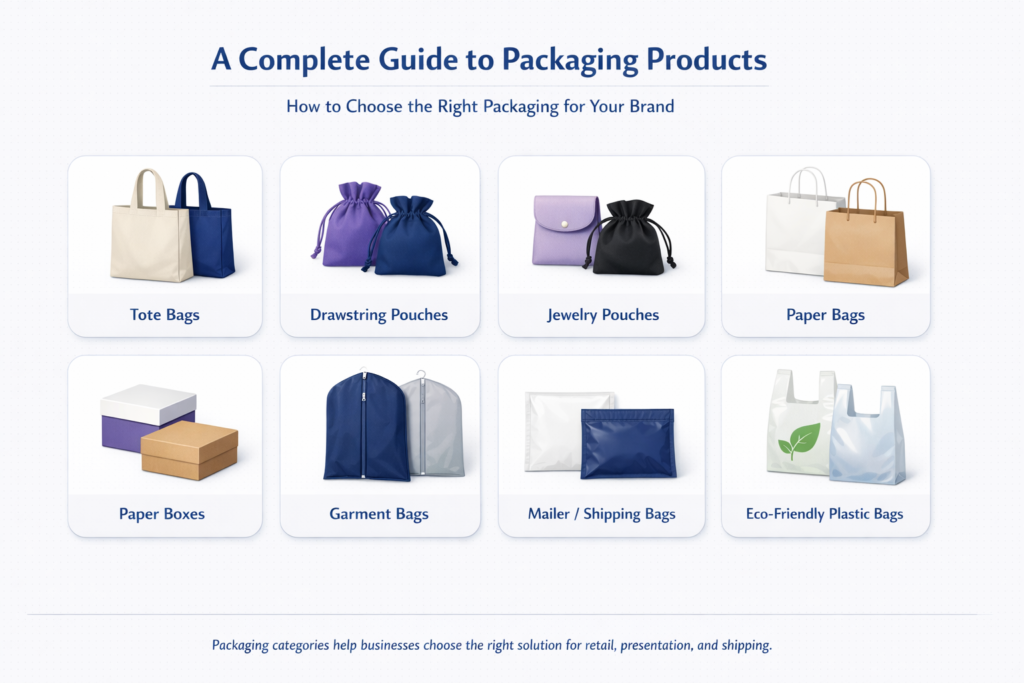
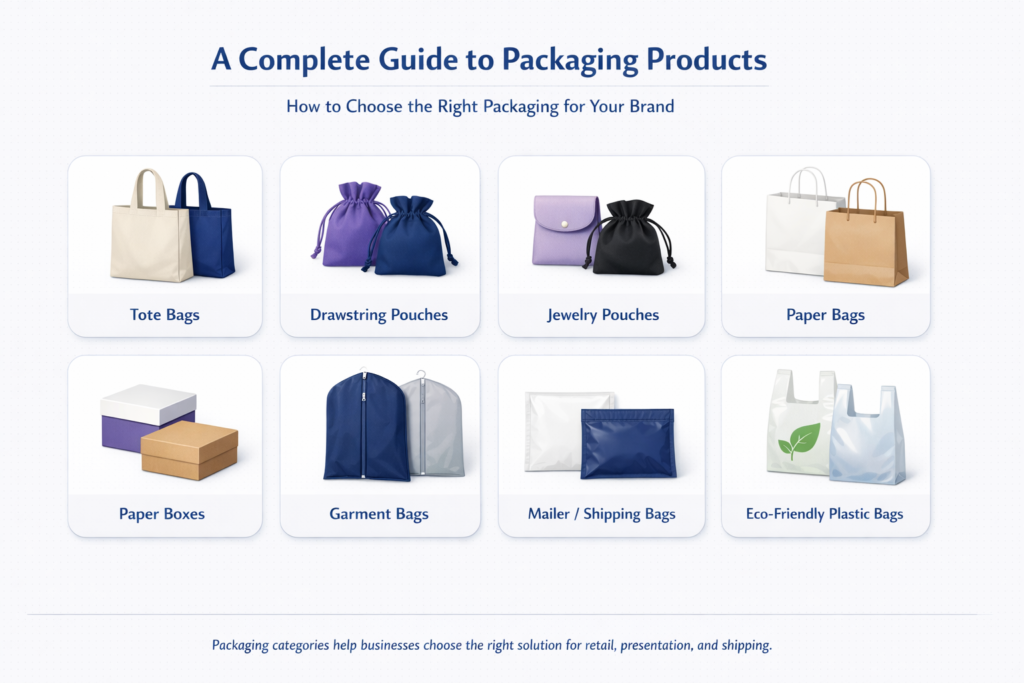
Choosing the right packaging products is an important decision for any business. Packaging not only protects products during storage and transportation, but also influences presentation, customer perception, and overall brand experience.
At ITENDEE, we work with businesses across retail, fashion, and e-commerce seeking packaging solutions that are both practical and well-presented. One common challenge buyers face is understanding which type of packaging to start with, especially when multiple options may appear similar at first glance.
This guide provides a clear, practical overview of commonly used packaging products and how they are typically applied in real business scenarios. Rather than focusing only on technical specifications, the goal is to help you quickly identify the most suitable packaging category before refining details such as size, material, and customization.
Whether you are sourcing packaging for everyday retail use, product presentation, or shipping, understanding how different packaging products are used will help you make more informed decisions and streamline the selection process.
How Our Product Range Is Structured
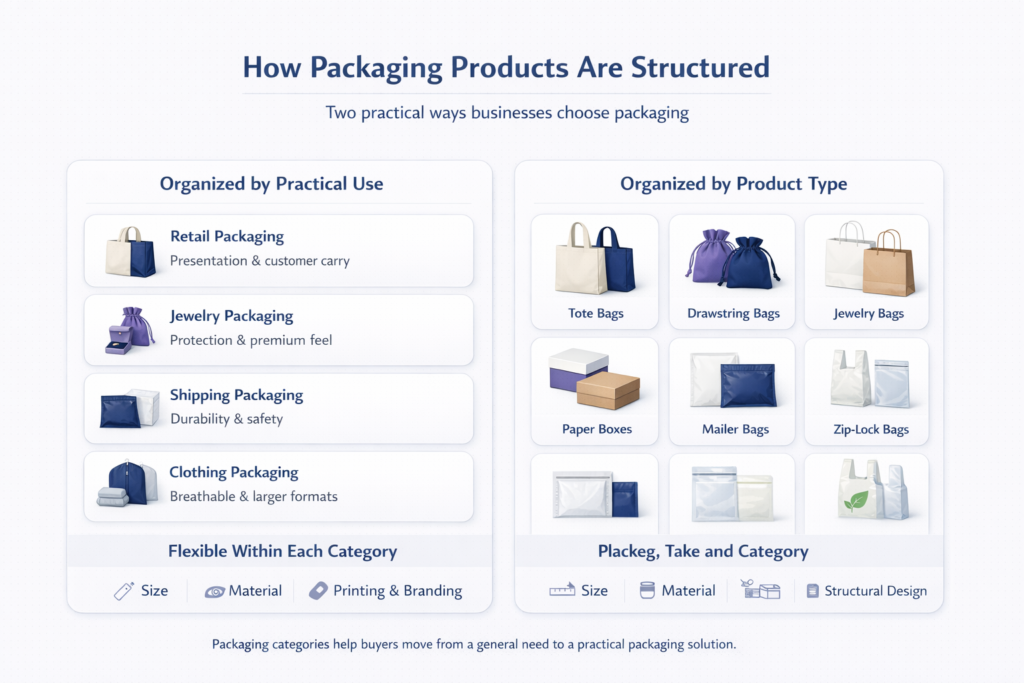
Choosing the right packaging becomes easier when products are organized in a way that reflects how businesses actually select packaging in real situations. At ITENDEE, our packaging range is structured in two practical ways: by practical use and by product type. This approach helps buyers quickly identify the most relevant starting point.
Organized by Practical Use
Many buyers begin by considering how the packaging will be used rather than the exact product name. Different industries and applications often require different packaging characteristics.
For example:
- Retail packaging often prioritizes presentation and customer carry
- Jewelry packaging focuses on protection and a premium appearance
- Shipping packaging emphasizes durability and product safety
- Clothing packaging may require breathable materials and larger formats
Organizing packaging by practical use helps narrow down options before moving into technical specifications.
Organized by Product Type
Other buyers prefer to explore packaging by specific product formats. Common packaging products include:
- Tote bags
- Drawstring bags
- Jewelry bags
- Paper bags
- Paper boxes
- Mailer bags
- Zip-lock bags
- Die cut bags
Each product category supports variations in size, material, and finishing, allowing packaging to be adapted to different industries and requirements.
Flexible Within Each Category
Every category allows flexibility in:
- Size
- Material
- Printing and branding
- Structural design
For instance, a tote bag designed for daily retail use may require stronger handles and heavier fabric, while a tote bag intended for promotional events may prioritize lighter materials and cost efficiency. Both belong to the same category but are optimized differently depending on usage.
Categories Are Starting Points, Not Limitations
Product categories are meant to guide decision-making, not restrict it. Many brands combine multiple packaging products within the same workflow. A typical example includes:
- A paper bag for in-store purchases
- A pouch for inner packaging
- A protective or mailer bag for shipping
This layered approach improves protection, presentation, and the overall customer experience.
Designed to Simplify the Buying Process
Most buyers begin with a general idea rather than exact specifications. Organizing packaging products by use helps narrow down options quickly, making it easier to discuss materials, sizing, and customization in the next stage.
In simple terms, this structure helps buyers move efficiently from a general need to a practical packaging solution.
Overview of Our Core Packaging Categories
When businesses look for packaging products, they are usually solving a practical problem: protecting a product, presenting it professionally, and ensuring it reaches customers in the right condition. The right packaging does more than hold a product; it influences first impressions, brand perception, and even how customers remember a purchase.
To make the selection process clearer, our packaging products are organized into categories based on how they are actually used in real business environments. Each category represents a common packaging need that brands regularly encounter across retail, e-commerce, events, and logistics.
Below is a practical overview to help you quickly understand where each category fits.
Tote Bags (Reusable Carry Bags)
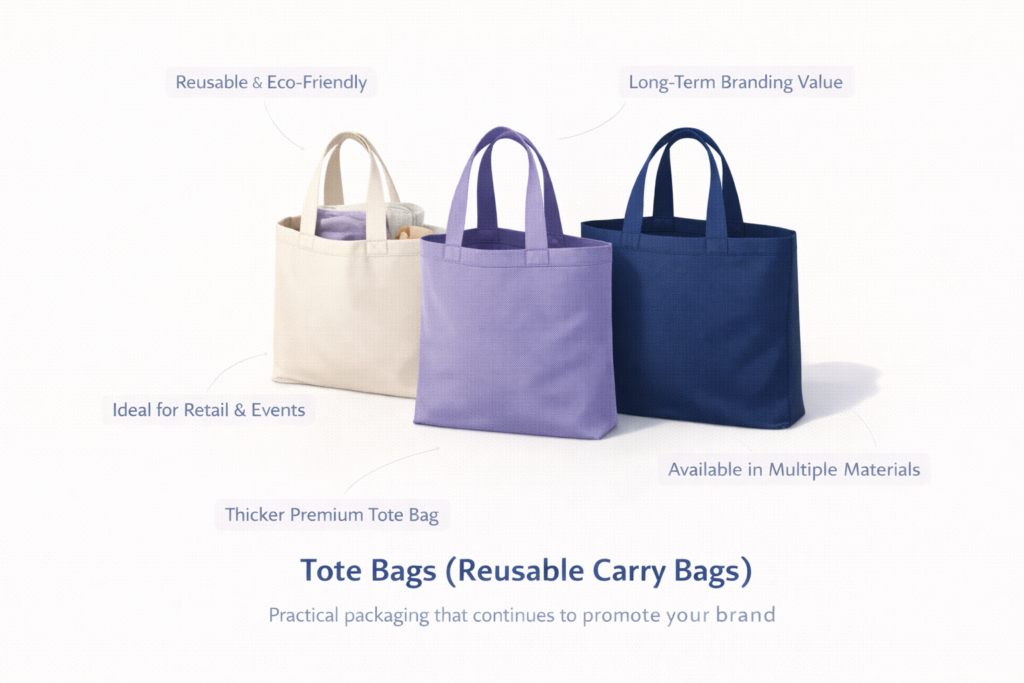
Tote bags are one of the most familiar and widely used packaging products, especially in retail and promotional settings. Many brands choose tote bags not only for packaging but also because customers continue to use them afterward, turning packaging into a long-term branding tool.
In everyday retail environments, tote bags provide convenience for customers carrying purchases. At events and exhibitions, they are often used to distribute promotional materials in a way that feels practical rather than disposable.
What makes tote bags particularly useful is their adaptability. The same category can support different needs, from lightweight promotional bags to stronger, heavier designs intended for repeated daily use. Material, stitching, handle construction, and printing methods are all adjusted depending on how the bag will be used.
Drawstring Pouches
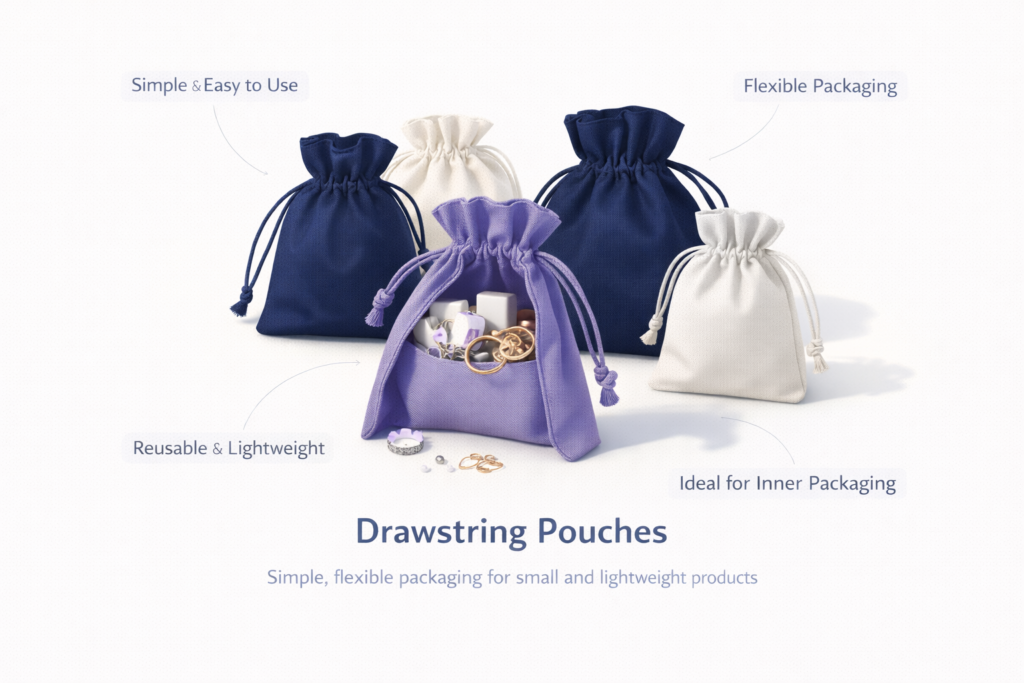
Drawstring pouches are often chosen when packaging needs to be simple, flexible, and easy to handle. They are especially useful for smaller or lightweight items that do not require rigid protection but still benefit from organized and presentable packaging.
One reason businesses prefer drawstring pouches is their efficiency. They are easy for customers to pack, store, and reuse. This makes them suitable for accessories, gift packaging, and travel-related products.
In many cases, drawstring pouches are used as inner packaging, protecting the product while also improving presentation when the outer packaging is opened.
Jewelry and Small Accessory Pouches
Small, delicate, or high-value items require packaging that feels appropriate to the product itself. Jewelry pouches are designed with this balance in mind, providing protection while also creating a refined presentation.
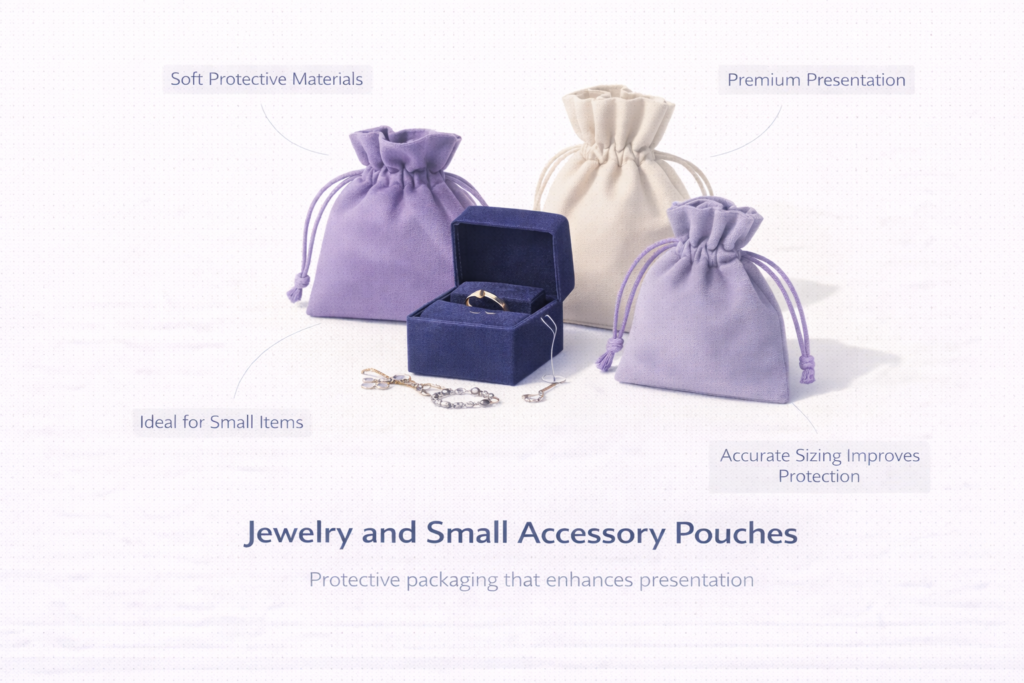
For jewelry brands, packaging is often part of the customer experience. The material texture, stitching quality, and logo finish contribute to how the product is perceived. A well-designed pouch can make even a small item feel more premium and carefully presented. Because items in this category are small, accurate sizing is important. Packaging that fits correctly protects the product better and improves overall presentation.
Paper Bags
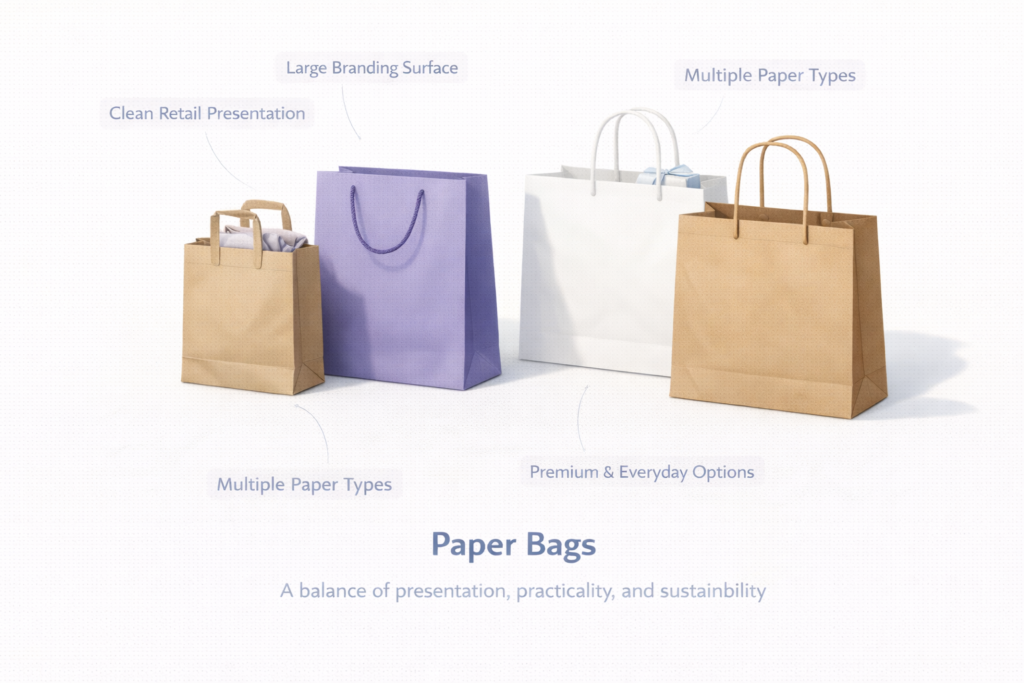
Paper bags remain one of the most widely used packaging products in retail because they combine presentation, practicality, and sustainability in a single solution.
They are commonly seen in fashion stores, gift shops, and boutiques where customers expect packaging to look clean, structured, and professional. Paper bags also provide a large surface for branding, making them effective for logo visibility and brand recognition.
Different paper types, handle styles, and reinforcement methods allow paper bags to be adapted to various weight requirements and price points. Some designs focus on affordability for everyday use, while others emphasize premium finishes for higher-end retail experiences.
Paper Boxes
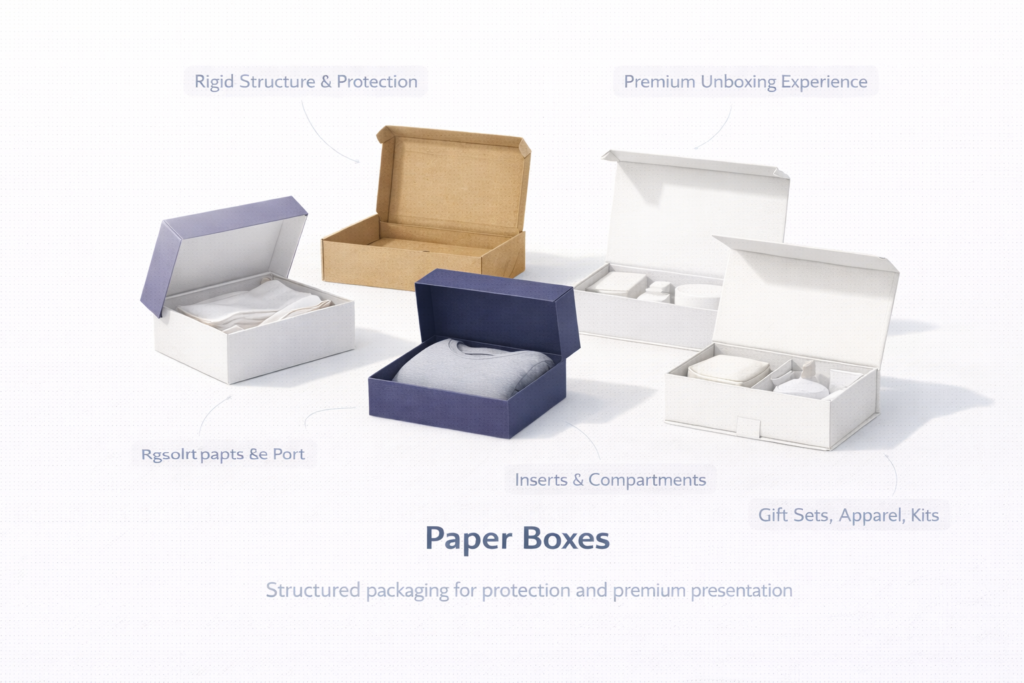
Paper boxes are typically chosen when a product requires more structure and protection than flexible packaging can provide. They help maintain product shape, prevent movement, and create a more organized presentation.
In addition to protection, paper boxes are often used to enhance perceived value. A well-designed box can make a product feel more premium and carefully prepared, which is why they are commonly used for gift sets, apparel packaging, and branded kits.
Boxes also allow for additional design elements such as inserts, compartments, and specialty finishes, making them suitable for products that require both protection and presentation.
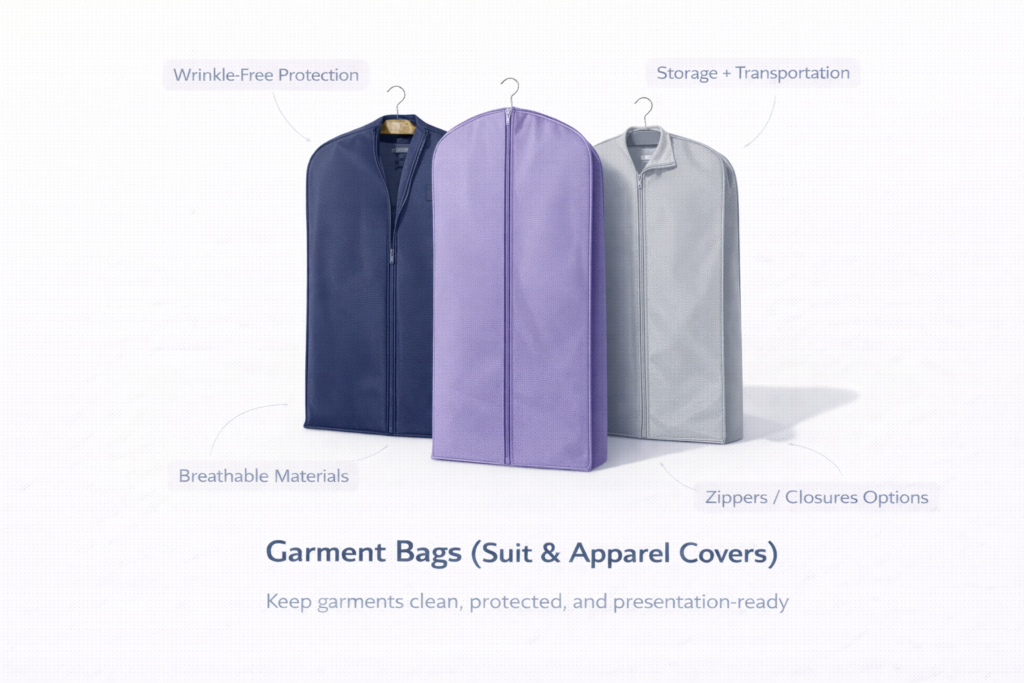
Garment Bags (Suit and Apparel Covers)
Garment bags serve a very specific purpose: protecting clothing during storage, transportation, and retail display. For businesses dealing with suits, dresses, coats, or formalwear, maintaining fabric condition is essential.
Unlike smaller packaging products, garment bags must accommodate larger items without compressing or damaging them. Material selection, closure type, and overall size are adjusted depending on the garment and how it will be stored or transported.
These bags are particularly important in situations where garments need to remain clean, wrinkle-free, and ready for presentation.
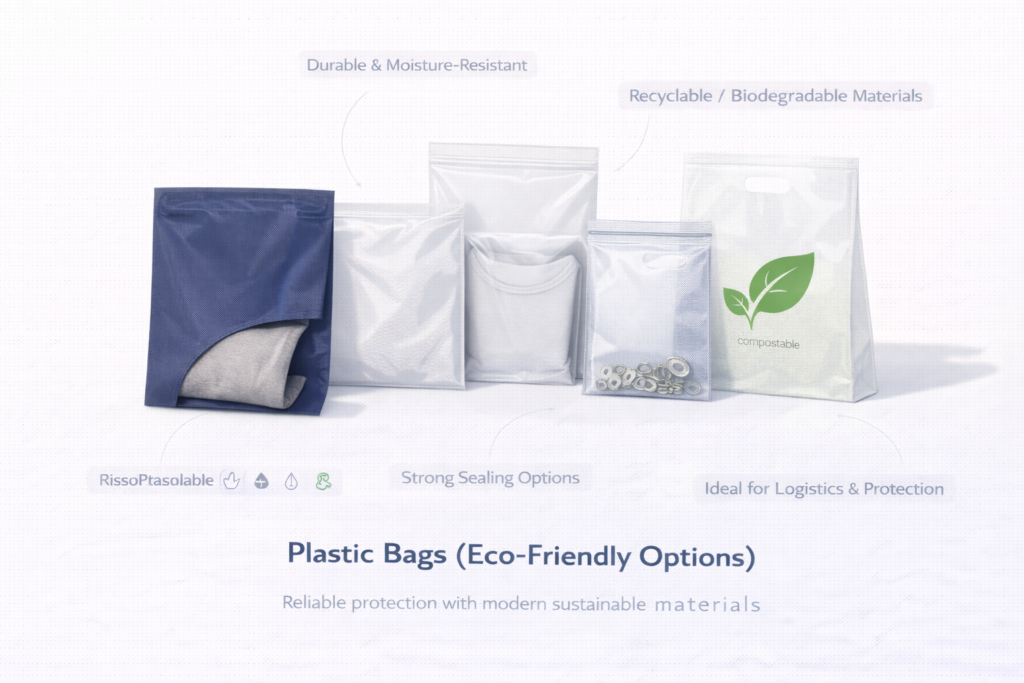
Plastic Bags (Eco-Friendly and Biodegradable Options)
Despite growing interest in alternative materials, plastic packaging continues to play an important role in many supply chains, particularly where durability and moisture resistance are required.
Modern plastic packaging increasingly focuses on recyclable and biodegradable materials, helping businesses meet environmental expectations while maintaining performance.
Plastic bags are often used in logistics, protective packaging, and applications where strength and sealing are critical. The goal is to provide packaging that performs reliably while aligning with evolving sustainability standards.
Other Custom Packaging Products
Not every packaging requirement fits neatly into a standard category. Some products require specialized formats, unique dimensions, or combinations of materials.
Custom packaging solutions are typically developed by starting with the product itself, its size, handling requirements, and intended presentation, then designing packaging around those needs. This approach ensures that packaging supports both functionality and brand identity rather than forcing the product into a predefined format.
In practical terms, each packaging category represents a starting point. Once the right direction is identified, details such as materials, sizes, and finishes can be refined to meet the exact requirements of the product and brand.
How Buyers Usually Narrow Down the Right Product Category
In most cases, buyers do not begin with a specific packaging product in mind. Instead, they start by considering a few practical factors related to their product and its handling. Understanding these basics usually makes it much easier to identify the most suitable packaging category.
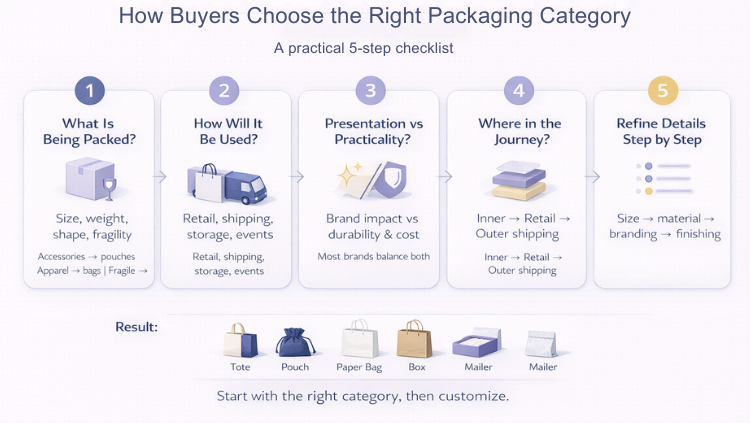
1. What Is Being Packed?
The first step is to look at the product itself.
Size, weight, shape, and fragility all influence the type of packaging that will work best.
For example:
- Small accessories may only require pouches or lightweight bags
- Apparel products may need breathable or flexible packaging
- Structured or fragile items may require boxes for better protection
Starting with the product helps narrow down options quickly and avoids unnecessary complexity.
2. How Will the Packaging Be Used?
Packaging is often designed for a specific stage of the product journey. Some packaging is intended primarily for presentation, while other types are focused on protection and transportation.
Buyers often consider:
- Will the packaging be used in a retail environment?
- Is it intended for shipping or storage?
- Will customers carry or reuse it after purchase?
Answering these questions helps determine the appropriate material, structure, and durability.
3. What Matters Most: Presentation or Practicality?
Different businesses have different priorities. Some packaging must create a strong visual impression, while others are chosen mainly for efficiency, durability, or cost control.
When presentation is important, buyers often focus on:
- Material appearance and finish
- Printing quality and branding
- Overall design and structure
When practicality is the priority, considerations usually include:
- Strength and durability
- Ease of packing and handling
- Cost efficiency in larger quantities
Most packaging decisions involve balancing both factors rather than focusing on only one.
4. Where Will the Packaging Be Used in the Product Journey?
Many brands use different types of packaging at different stages, such as:
- Inner packaging to protect the product
- Retail packaging for presentation
- Outer packaging for transport or shipping
Thinking about packaging as part of a process often helps clarify which category to start with.
5. Refining the Details Step by Step
Once the general direction is clear, details such as size, material, and branding can be refined gradually. Many buyers begin with a broad idea and finalize specifications after reviewing references, discussing requirements, or evaluating samples.
At ITENDEE, this step-by-step approach helps ensure that packaging solutions are practical, efficient, and aligned with real usage requirements.
Common Questions Buyers Often Ask
Do I need to choose a specific packaging product before contacting ITENDEE?
No. Many buyers reach out with only a general idea of what they need to package. Basic information, such as the type of product, approximate size, or intended use, is usually enough to begin identifying suitable packaging options.
Can one packaging product be used for different purposes?
Yes. Most packaging categories are flexible and can be adapted by adjusting size, material, or finishing. For example, a drawstring bag used for jewelry packaging may differ in material or dimensions from one used for accessories, even though both belong to the same category.
Are packaging sizes fixed?
No. Most packaging solutions are customized to meet the specific product requirements. This helps ensure better protection, improved presentation, and efficient use of materials.
What information is helpful when exploring packaging options?
Providing a few basic details can make the process much easier, such as:
- The type of product being packed
- Approximate size or weight
- How the packaging will be used (retail, shipping, storage, or events)
- Whether branding or printing is required
Even partial information is usually enough to begin narrowing down suitable options.
Can multiple packaging types be used together?
Yes. Many businesses use layered packaging, for example, inner packaging to protect the product, retail packaging for presentation, and outer packaging for transport. This approach often improves both protection and customer experience.
Not Sure Which Product to Start With?
Choosing the right packaging does not require a fully detailed brief from the beginning. In many cases, a brief description of your product or its intended use is enough to identify a practical starting point.
At ITENDEE, packaging projects typically begin with understanding the product, its handling requirements, and the desired presentation. From there, materials, sizes, and finishing details are refined step by step to arrive at a solution that is both functional and visually aligned with your brand.
If you are still exploring options, sharing a few basic details, or even reference images, can help narrow down suitable packaging categories and move forward with clarity. The goal is not to finalize everything immediately, but to begin in the right direction and refine the solution based on real requirements.


